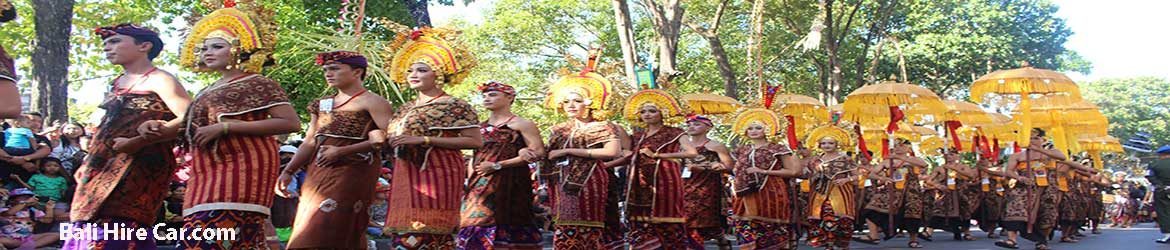
Located in the heart of Denpasar, the Bali Museum—also known as Museum Bali—is one of the best places to discover the island’s history, traditional arts, religious customs, and everyday life. Situated beside Puputan Badung Square and close to Jagatnatha Temple, the museum is an excellent destination for travelers who want to experience the cultural side of Bali beyond its beaches and popular resorts.
A visit to the Bali Museum can easily be included in a Denpasar city tour. Visitors can reach the museum by renting a self-drive car for greater flexibility or choosing a car rental with a local driver for a more comfortable and convenient journey.
A Fascinating Introduction to Balinese Culture
The Bali Museum preserves an extensive collection of historical and cultural objects from different regions of the island. Its exhibits help visitors understand how Balinese traditions developed and how art, religion, agriculture, family life, and community customs remain closely connected.
Inside the museum complex, visitors can discover traditional textiles, ceremonial equipment, religious objects, sculptures, paintings, ancient inscriptions, archaeological discoveries, household utensils, farming tools, weapons, and other artifacts.
Rather than focusing on only one period, the museum presents different aspects of Balinese life throughout history. It is therefore a valuable destination for first-time visitors, families, students, photographers, and travelers with a particular interest in history and culture.
Traditional Balinese Architecture
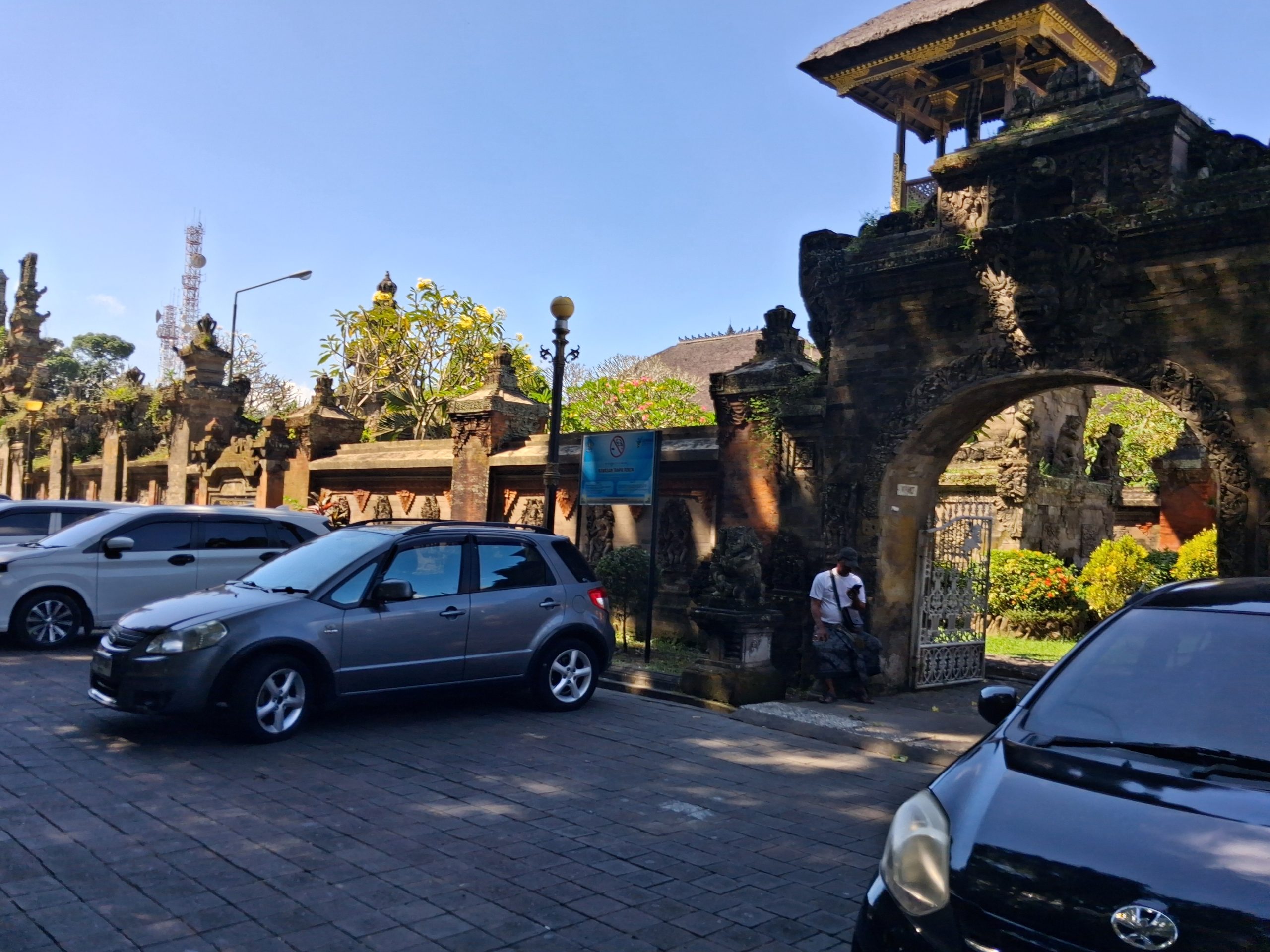
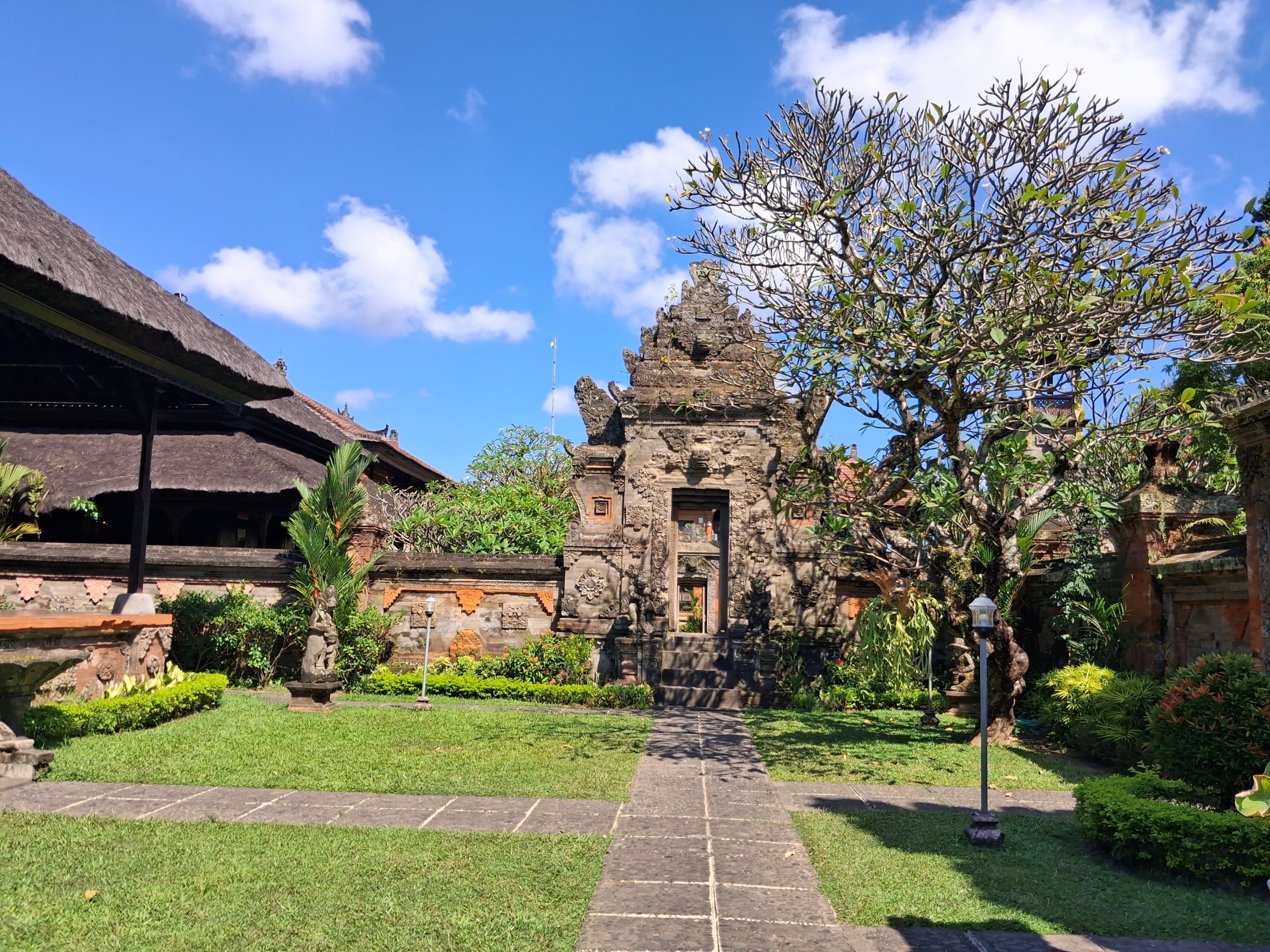
The museum complex is an attraction in itself. Its design resembles a traditional Balinese palace and temple compound, with beautifully decorated gateways, brick walls, stone carvings, courtyards, pavilions, and ornamental details.
As visitors walk through the grounds, they can appreciate the principles of traditional Balinese architecture. The buildings are arranged around open courtyards, creating a peaceful atmosphere despite the museum’s central-city location.
The combination of red brick, carved stone, tropical gardens, and classical structures also provides excellent opportunities for photography. Visitors are encouraged to dress respectfully, particularly because the architecture and several exhibits are closely associated with Bali’s religious heritage.
Explore the Museum’s Different Pavilions
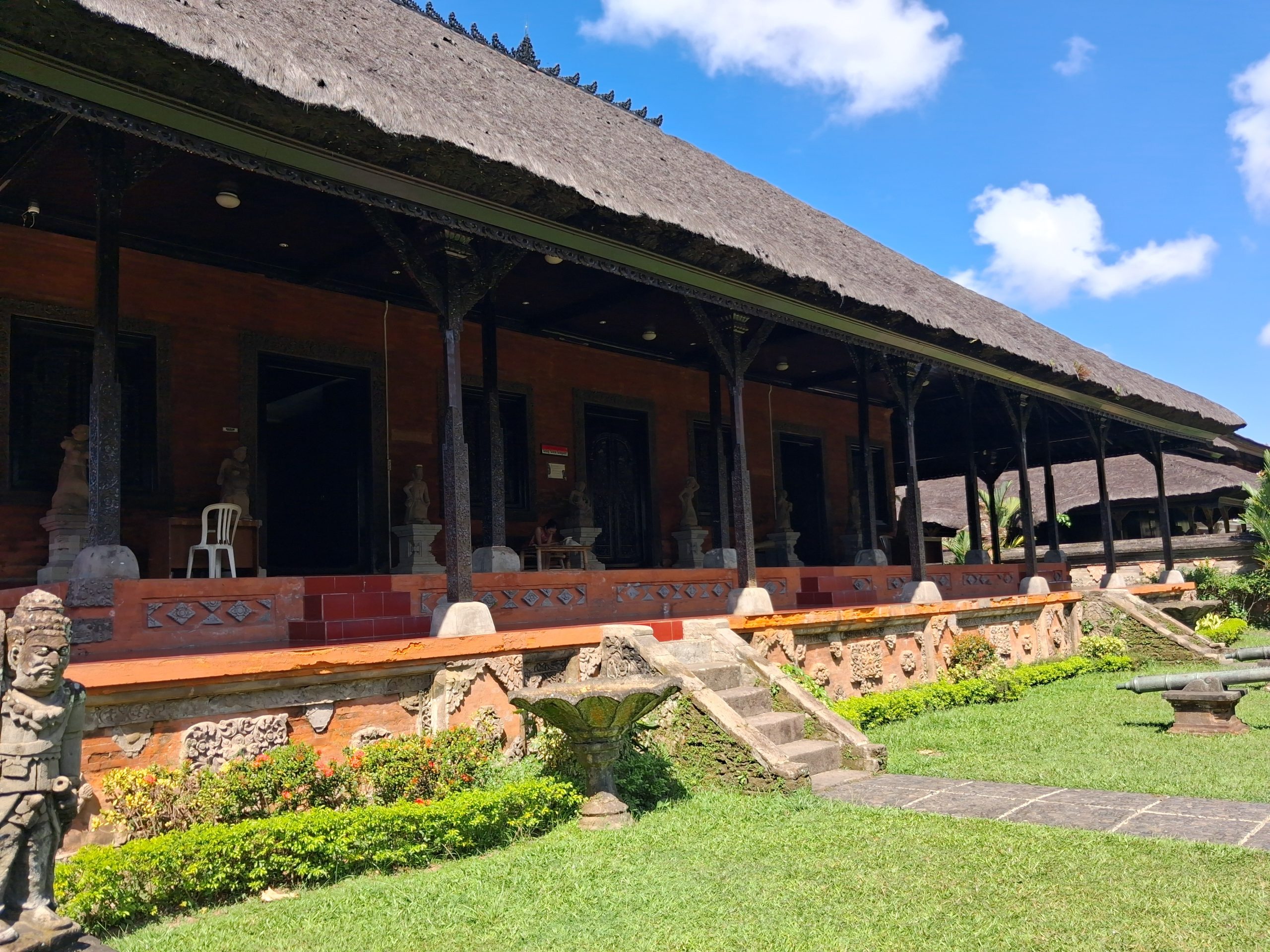
The Bali Museum consists of several buildings and pavilions, each displaying collections related to particular areas or aspects of Balinese culture.
Tabanan Pavilion
The Tabanan Pavilion is associated with traditional Balinese performance and ceremonial art. Visitors may find objects connected to dance, music, theater, masks, costumes, and other artistic expressions.
Traditional performances in Bali are not created solely for entertainment. Many dances and musical presentations have religious, historical, or social significance. The exhibits provide insight into the important role of performance in Balinese ceremonies and community life.
Karangasem Pavilion
The Karangasem Pavilion features collections connected to the eastern region of Bali. This area is known for its royal heritage, distinctive architecture, religious traditions, and artistic craftsmanship.
The exhibits offer an interesting perspective on regional identity and demonstrate how cultural practices can differ across the island while remaining part of a shared Balinese heritage.
Buleleng Pavilion
The Buleleng Pavilion represents northern Bali, a region with a long history of trade and contact with people from outside the island. Its collection may include traditional clothing, textiles, household objects, agricultural tools, and items associated with daily life.
These artifacts illustrate how families and village communities lived and worked before modern technology transformed the island.
Prehistoric and Archaeological Collections
One of the museum’s most educational sections contains archaeological and prehistoric objects. These collections may include stone implements, ancient statues, burial-related objects, pottery, and other discoveries from different historical periods.
They demonstrate that Bali’s cultural story began long before the development of modern tourism. Visitors can learn about early settlements, belief systems, craftsmanship, and the gradual evolution of Balinese society.
Learn About Balinese Ceremonies and Daily Life
Religion and tradition are deeply integrated into everyday life in Bali. The museum’s collections help explain the objects used during temple festivals, family ceremonies, cremation rituals, agricultural activities, and traditional performances.
Visitors can also learn about Balinese clothing, weaving techniques, tools, weapons, household equipment, and community traditions. These exhibits provide valuable background for understanding the ceremonies, processions, offerings, and traditional clothing that travelers may see elsewhere during their holiday.
Visiting the Bali Museum at the beginning of a trip can make other cultural experiences more meaningful. After learning about local customs, visitors may better appreciate Bali’s temples, villages, dances, markets, and religious celebrations.
An Ideal Destination for a Denpasar City Tour
The Bali Museum is conveniently located near several important attractions, making it a perfect stop on a Denpasar sightseeing itinerary. A city tour may combine the museum with:
- Puputan Badung Square
- Jagatnatha Temple
- Catur Muka Statue
- Badung Traditional Market
- Kumbasari Art Market
- Bajra Sandhi Monument
- Traditional food and handicraft shops around Denpasar
A visit usually takes around one to two hours, depending on the visitor’s interest in history, architecture, and photography. Those who enjoy reading exhibit information or examining the collections closely may wish to spend longer.
Visit the Bali Museum with a Self-Drive Rental Car
Hiring a self-drive car is an excellent option for independent travelers who want to explore Denpasar at their own pace. You can choose your own departure time, stay at the museum for as long as you wish, and continue to other destinations without following a fixed tour schedule.
A self-drive rental is especially suitable for couples, families, and experienced drivers who are comfortable with Bali’s traffic conditions. A compact city car is convenient for navigating Denpasar, while an MPV provides additional comfort and space for families or small groups.
Travelers choosing self-drive should use a navigation application, pay attention to one-way streets, and allow extra time during busy traffic periods. Parking availability may vary, particularly during ceremonies or special events.
Visit with a Private Car and Driver
For a more relaxing experience, hiring a car with a professional local driver. Your driver can pick you up from your hotel, villa, airport, or another agreed location and take you directly to the museum.
Hiring a car with a driver offers several advantages:
- No need to navigate busy city traffic
- Convenient hotel or villa pickup
- Flexible sightseeing itinerary
- Easier access to several attractions in one day
- Local knowledge of routes and parking areas
- Comfortable travel in a private air-conditioned vehicle
- More time to enjoy the journey without worrying about directions
A private driver is particularly recommended for first-time visitors, families with children, senior travelers, and groups who want a smooth city-tour experience. Please note that a driver is not automatically a licensed museum guide, although they may offer general local information during the journey.
Suggested Denpasar City Tour Itinerary
A full or half-day city tour can include the following stops:
- Bajra Sandhi Monument
Begin the tour at this impressive landmark, which tells the story of the Balinese people and their historical struggles. - Bali Museum
Explore the museum’s traditional buildings and collections of archaeological objects, ceremonial equipment, textiles, sculptures, and daily-life artifacts. - Puputan Badung Square and Jagatnatha Temple
Enjoy a short walk around the historic city center and admire one of Denpasar’s important Hindu temples. - Catur Muka Statue
Visit this well-known four-faced statue, located at a busy and historically significant intersection. - Badung Traditional Market
Finish the journey at one of Bali’s largest traditional markets, where visitors can discover local produce, spices, flowers, textiles, handicrafts, and everyday Balinese life.
The itinerary can be adjusted according to your preferred schedule, hotel location, traffic conditions, and personal interests.
Useful Visitor Information
- Wear comfortable clothing and footwear.
- Dress respectfully when visiting cultural and religious locations.
- Bring drinking water, sunscreen, sunglasses, and a hat.
- Carry some Indonesian rupiah for entrance fees and small purchases.
- Ask permission before photographing people or ceremonial activities.
- Do not touch museum collections unless clearly permitted.
- Avoid using flash photography where restrictions apply.
- Parents should supervise children inside exhibition areas.
- Allow additional travel time during rush hour or major ceremonies.
- Check current opening hours, admission prices, and holiday closures before departure.
Why Visit the Bali Museum?
The Bali Museum is more than a collection of old objects. It is a place where visitors can gain a deeper understanding of the island’s identity. The museum connects Bali’s ancient past with the traditions that remain visible today in temples, ceremonies, clothing, dance, architecture, and daily community life.
Whether you are a history enthusiast or simply curious about the destination you are visiting, the Bali Museum adds an educational and meaningful dimension to your holiday. Its central location also makes it easy to combine with markets, monuments, temples, and other Denpasar attractions.
Book a self-drive rental car for the freedom to explore independently, or choose a private car with a local driver for a convenient and relaxing city tour. Whichever option you select, a visit to the Bali Museum offers an enriching journey into the history, creativity, and living traditions of the Island of the Gods.
